The Ultimate Homemade Gluten-Free Gochujang Sauce – A Bold, Spicy-Sweet Korean Classic Made Easy

A Bold, Spicy-Sweet Korean-Inspired Staple You Can Make at Home
If you’ve ever flipped over a jar of store-bought gochujang and spotted wheat or barley in the ingredients, you already know the frustration. Most commercial versions aren’t gluten-free, and the ones labeled as such can be hard to find or expensive. This homemade version solves that problem. It delivers the same deep, spicy-sweet flavor using simple, accessible ingredients — and you control exactly what goes in it.
What Is Gochujang?
Gochujang is a fermented Korean chili paste traditionally made from gochugaru which is Korean red chili flakes, fermented soybeans, rice, and salt. It’s thick, sticky, and complex. In traditional Korean cooking, it’s aged over months to develop its characteristic depth.
Store-bought versions often use wheat as a fermentation base or thickener, which makes them off-limits for anyone avoiding gluten. This recipe recreates the essence of gochujang — bold flavor and rich texture — without the fermentation wait or problematic ingredients.
Why Make It at Home?
Making gochujang sauce from scratch gives you benefits that store-bought simply can’t match:
- No wheat-based grains or hidden gluten sources
- No barley malt or unclear additives
- Full control over spice level and sweetness
- A fresher, cleaner flavor without preservatives
- Easier to adjust for other dietary needs
Gluten-free does not mean flavor-free. This version is rich, complex, and satisfying — and holds up well against traditional versions.
Flavor Profile
This sauce is built around balance rather than one-note heat:
- Smoky heat from Korean gochugaru chili flakes
- Savory depth from gluten-free fermented ingredients
- Mild sweetness that rounds out the spice
- Slight acidity for brightness and lift
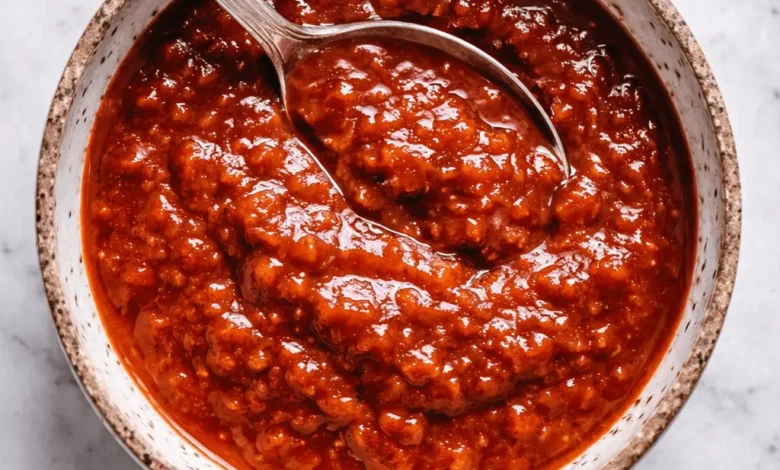
- Thick, clingy texture that coats food evenly
The result is bold without being overwhelming — suitable for both cooking and finishing dishes.
Ingredients
Base
- ½ cup Korean gochugaru (certified gluten-free)
- ¼ cup gluten-free tamari or coconut aminos
- ¼ cup maple syrup or brown rice syrup
- 2 tablespoons gluten-free miso paste
- 2 tablespoons rice vinegar
- 2 tablespoons water
Optional Additions
- 1 teaspoon minced garlic
- 1 teaspoon grated fresh ginger
- ½ teaspoon sesame oil
- Pinch of white pepper
A note on gochugaru: Authentic flavor depends on using Korean chili flakes, not cayenne or standard chili powder. Gochugaru is milder, slightly fruity, and carries a subtle smokiness that other chili powders don’t replicate. Look for it at Korean or Asian grocery stores, or online. If you prefer less heat, reduce the amount slightly.
Instructions
Step 1 — Bloom the chili flakes Combine gochugaru with warm water in a heat-safe bowl. Stir and let it rest for 5 minutes to soften and release its flavor.
Step 2 — Build the base Add tamari, maple syrup, miso paste, and rice vinegar to the chili mixture. Stir until smooth and fully combined.
Step 3 — Add aromatics Stir in garlic, ginger, and sesame oil if using. These deepen the overall flavor and bring it closer to the traditional profile.
Step 4 — Simmer Transfer the mixture to a small saucepan and cook over low heat for 10–15 minutes, stirring frequently. The sauce will thicken and deepen in color.
Step 5 — Cool and taste Remove from heat and allow to cool completely. Taste and adjust sweetness, saltiness, or heat to your preference.
Texture Guide
A well-made gochujang sauce should be:
- Thick but still spreadable
- Sticky without feeling gummy
- Dense enough to hold its shape briefly on a spoon
If it thickens too much, add water one tablespoon at a time. If it remains too loose, continue simmering for a few more minutes.
How to Use It
Traditional uses:
- Bibimbap and Korean rice bowls
- Tteokbokki-style rice cake dishes
- Korean-inspired stews and soups
Everyday uses:
- Marinade for tofu, chicken, or beef
- Base for spicy salad dressings
- Glaze for roasted vegetables or cauliflower
- Spread for wraps and grain bowls
A small amount goes a long way — start with a teaspoon and build from there.
Variations
- Milder version: Reduce gochugaru by half and increase the sweetener slightly
- Extra spicy: Add an extra tablespoon of gochugaru or a small amount of chili paste
- Smoky: Stir in a pinch of smoked paprika
- Lower sugar: Use coconut aminos in place of tamari and reduce the sweetener
Storage
- Store in a sealed glass jar in the refrigerator
- Keeps well for up to 2 weeks
- Stir before each use as ingredients may settle
- Flavor continues to develop after the first 24 hours
Freezing is not recommended — the texture changes noticeably after thawing.
Nutritional Information (per 1 tablespoon, approximate)
| Nutrient | Amount |
|---|---|
| Calories | 30–40 kcal |
| Carbohydrates | 5–7 g |
| Sugars | 3–5 g |
| Fat | 0–1 g |
| Protein | 1 g |
| Sodium | Varies by tamari used |
✓ Gluten-Free ✓ Dairy-Free ✓ Vegan ✓ Nut-Free
Recipe Details
- Cuisine: Korean-Inspired
- Course: Sauce / Condiment
- Skill Level: Beginner
Frequently Asked Questions
Is traditional gochujang gluten-free? Most store-bought versions are not. Wheat or barley is commonly used as a fermentation base, so always check labels carefully.
Can I ferment this sauce? This recipe skips fermentation for convenience, but the flavor naturally deepens as it sits in the fridge over a few days.
Can I freeze gochujang sauce? Freezing isn’t recommended — the texture tends to break down after thawing.
How spicy is this? Medium heat at the base recipe. It’s straightforward to dial the spice up or down depending on how much gochugaru you use.
Can I use it as a dipping sauce? Yes. Thin it slightly with a small amount of water or sesame oil for a looser consistency that works well for dipping.