The Ultimate Homemade Gluten-Free Gochujang Sauce – A Bold, Spicy-Sweet Korean Classic Made Easy

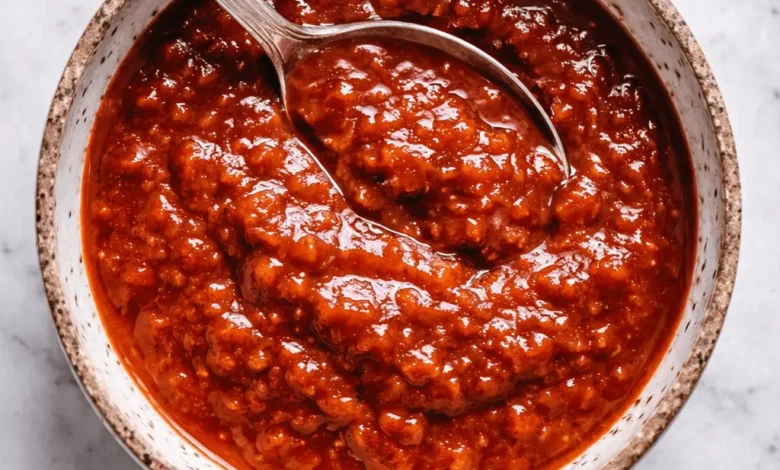
If you have ever flipped over a jar of store-bought gochujang and spotted wheat or barley in the ingredients, this is the recipe that ends that frustration for good. This Homemade Wheat-Free Gochujang Sauce uses six clean ingredients, one small saucepan, and twenty minutes. The result is a thick, deep, spicy-sweet Korean-inspired paste that outperforms most commercial versions on flavour, costs a fraction of the price, and contains nothing you would need to read twice on a label. It keeps for two weeks and makes everything it touches significantly better.
Wheat-FreeGluten-FreeVeganDairy-Free6 Ingredients20 Minutes2-Week Shelf Life
What Makes This Condiment a Wheat-Free Kitchen Essential
Gochujang is a fermented Korean chilli paste traditionally made from gochugaru, fermented soybeans, rice, and salt. It is thick, sticky, and complex, aged over months in traditional production to develop its characteristic depth of flavour. The problem for anyone eating wheat-free is that most commercial versions use wheat as a fermentation base or thickener, making the label a source of regular frustration. Genuinely gluten-free versions exist but are expensive and inconsistent in their availability.
This homemade version solves that completely. It skips the months-long fermentation by using gluten-free miso paste as its umami backbone and gochugaru as its chilli base, building the same bold, spicy-sweet profile in twenty minutes without a single gram of wheat. The result is completely wheat-free by design, not by compromise, and it delivers the same five-note complexity that makes gochujang the most versatile condiment in Korean cooking: smoky heat, savoury depth, mild sweetness, slight acidity, and a thick, clingy texture that coats food evenly in a single spoonful.
|
6 Ingredients |
20 Total Minutes |
100% Wheat-Free |
2 wks Shelf Life |
1 Saucepan |
The Ingredients That Make This Sauce Work
Gochugaru: The Ingredient That Cannot Be Substituted
Gochugaru is Korean coarse red chilli flake, and it is the one ingredient in this recipe where there is no meaningful substitute. Standard chilli flakes are too sharp, too one-dimensional, and lack the fruity, mildly smoky character that gives gochujang its distinctive warmth. Gochugaru is milder and more complex, with a slow-building heat and a faint sweetness that no other chilli powder replicates. It is available in Korean and Asian grocery stores and widely online. It is completely wheat-free with no processing risk. For this recipe, look for gochugaru labelled certified gluten-free if you are highly sensitive, as some packing facilities handle multiple products.
Label Check The critical label to verify in this recipe is the miso paste. Most gluten-free miso is made from rice or chickpeas rather than barley, but not all miso is gluten-free. Always look for miso paste labelled gluten-free or wheat-free. South River Miso, Miso Master Organic, and most chickpea miso products are certified safe. Standard barley miso contains gluten and should not be used here. Also verify your tamari: always choose tamari labelled 100% wheat-free, not standard soy sauce, which contains wheat by default. |
Gluten-Free Miso Paste: The Umami Shortcut That Works
Traditional gochujang gets its deep savoury complexity from months of soybean fermentation. This recipe replaces that fermentation entirely with gluten-free miso paste, which is already fermented and already carries the same umami backbone in a ready-to-use form. Two tablespoons of gluten-free miso paste contributes the savoury depth that would otherwise take months to develop, and it does so without a single gram of wheat. Use white or yellow miso for a milder result, or red miso for a deeper, more intense flavour. All are available in most well-stocked supermarkets and health food stores.
Tamari, Rice Vinegar, and Maple Syrup: The Seasoning Balance
Wheat-free tamari provides the salty, umami-rich backbone that soy sauce would in a wheat-containing version, without the wheat. Rice vinegar adds the clean acidity that stops the sauce tasting flat or one-dimensional and elongates the finish of every bite. Maple syrup or brown rice syrup provides the sweetness that rounds out the heat and creates the spicy-sweet balance gochujang is known for. These three ingredients together are completely, inherently wheat-free. The only label worth checking is the tamari, which must be certified wheat-free rather than standard soy sauce.
Flavour Development Tip This sauce tastes noticeably better on day two than it does the moment it cools. The gochugaru and miso continue to integrate as the sauce rests in the refrigerator overnight, deepening into a more cohesive, rounded flavour profile. If you have the time, make it the evening before you plan to use it. A jar made on Sunday is at its best from Monday through to Wednesday. |
| “Every jar of store-bought gochujang I could find had wheat somewhere on the label. This homemade version is cleaner, more flavourful, and costs almost nothing to make. Once you have it in the fridge, you will use it on everything.” |
Full Recipe Homemade Wheat-Free Gochujang SauceGochugaru bloomed with gluten-free miso paste, wheat-free tamari, maple syrup, and rice vinegar into a thick, spicy-sweet Korean-inspired paste. Wheat-free, gluten-free, vegan. Ready in 20 minutes. Keeps for 2 weeks. | |||||||||||||||||||||||||||||||||||||||||||
| |||||||||||||||||||||||||||||||||||||||||||
Wheat-FreeGluten-FreeVeganDairy-FreeNo Hidden WheatPantry Staple ✓ | |||||||||||||||||||||||||||||||||||||||||||
Ingredients The Base
Optional Aromatics
Equipment
| Instructions
Nutrition Per Tablespoon (approx.)
| ||||||||||||||||||||||||||||||||||||||||||
Storage and Shelf Life Guide
Store in a sealed glass jar in the refrigerator for up to two weeks. The sauce will thicken in the cold, which is normal. Stir before each use and add a teaspoon of warm water if it has become too thick to spread easily. The flavour continues to develop and deepen over the first 24 to 48 hours as the gochugaru and miso fully integrate, so the jar made on Sunday will taste better by Tuesday than it did when it first cooled.
Freezing is not recommended. The texture breaks down noticeably after thawing and does not recover. For longer storage, the only practical approach is to make a new batch, which takes twenty minutes and costs almost nothing.
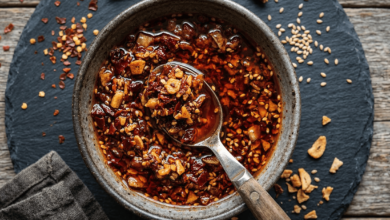
Texture Guide A correctly made batch should be thick but spreadable at room temperature, sticky without feeling gummy, and dense enough to hold its shape briefly on a spoon. If it thickens beyond spreadable during cooking, add water one tablespoon at a time and stir until you reach the right consistency. If it remains too loose after simmering, continue cooking uncovered for 2 to 3 more minutes and it will tighten. |
10 Ways to Use Wheat-Free Gochujang Sauce
A single jar earns its place in the refrigerator many times over. Here is how to use it across a wheat-free week:
- Bibimbap and Korean rice bowls — the original use, still the best. Spoon generously over rice with vegetables, sesame oil, and a fried egg.
- Marinade for tofu, chicken, or beef — mix with sesame oil and a splash of rice vinegar. Marinate for 30 minutes and grill, roast, or pan-fry.
- Stir-fry sauce base — one tablespoon replaces an entire seasoning blend. Add in the final 30 seconds of any wheat-free stir-fry.
- Glaze for roasted vegetables — toss cauliflower, broccoli, or sweet potato in a teaspoon of gochujang before roasting. The sauce caramelises and crisps at the edges beautifully.
- Spicy salad dressing base — whisk one teaspoon with sesame oil, rice vinegar, and a little honey for a bold, wheat-free Korean-inspired dressing.
- Noodle sauce — stir a tablespoon through wheat-free rice or buckwheat noodles for instant depth and colour.
- Dipping sauce — thin slightly with water or sesame oil for a looser consistency. Works well with dumplings, spring rolls, and crudités.
- Spread for grain bowls — swipe a spoonful across the base of a bowl before layering in grains, vegetables, and protein.
- Soup and stew base — stir a tablespoon into any Korean-inspired broth or wheat-free ramen for an instant depth of flavour.
- Scrambled eggs or fried egg finish — a half-teaspoon drizzled over eggs on rice transforms a basic breakfast into something genuinely craveable.
Recipe Variations
|
|
|
|
Frequently Asked Questions
Is traditional gochujang gluten-free? Most store-bought versions are not. Wheat or barley is commonly used as a fermentation base or thickener, which means the label often shows gluten-containing ingredients even in products that appear to be simply chilli paste. Always read the full ingredient list on commercial gochujang. This homemade version was designed specifically to deliver the same flavour profile without any wheat or gluten-containing ingredients. |
Can I ferment this sauce for a more authentic flavour? This recipe skips fermentation for convenience, using gluten-free miso paste to replicate the fermented umami depth without the months-long wait. The flavour is not identical to traditionally fermented gochujang, but it is genuinely close for a twenty-minute recipe. If you want to experiment with fermentation, the flavour will naturally deepen over the first few days in the refrigerator regardless, as the ingredients continue to integrate. |
How spicy is this at the base recipe? Medium heat. Gochugaru is milder and more fruity than standard chilli flakes, which means the base recipe is accessible to most heat tolerances. A single tablespoon in a stir-fry for four people will be noticeable but not challenging. It is straightforward to dial up or down: reduce the gochugaru by half for a mild version, or add extra gochugaru and a pinch of cayenne for genuine heat. |
What is the difference between wheat-free and gluten-free? Wheat-free means free of the wheat grain specifically. Gluten-free means free of gluten, a protein found in wheat, barley, rye, and spelt. This recipe is both: no wheat-derived or gluten-containing ingredients appear in any component. For anyone with celiac disease, the key label to verify is the miso paste, which must be certified gluten-free rather than simply wheat-free, as barley miso contains gluten even though it contains no wheat. |
Can I use this as a dipping sauce straight from the jar? Yes. The sauce as made is thick enough to use as a condiment or spread. For a dipping sauce with a looser consistency, thin it with a small amount of water or sesame oil and stir well. A teaspoon of rice vinegar added at this stage will also brighten the flavour if it has deepened significantly in the fridge over several days. |
The Verdict
Homemade Wheat-Free Gochujang Sauce is one of those recipes that earns its place in the permanent rotation the first time you use it. Six ingredients, one saucepan, twenty minutes, and you have a jar of something that transforms every bowl of rice, every stir-fry, every roasted vegetable, and every marinade it touches. The label is clean. The heat is adjustable. The flavour is genuine.
It is wheat-free not because the recipe was adapted to remove wheat, but because the ingredients that define gochujang, gochugaru, miso, tamari, rice vinegar, and a touch of sweetness, were always going to be the right foundation. Make it once and the idea of buying a wheat-containing commercial version will not make sense again.
| If you made this gochujang sauce, pin it to your condiment board and share it with your followers. Every save helps another home cook find a wheat-free kitchen staple they will reach for every single week. |