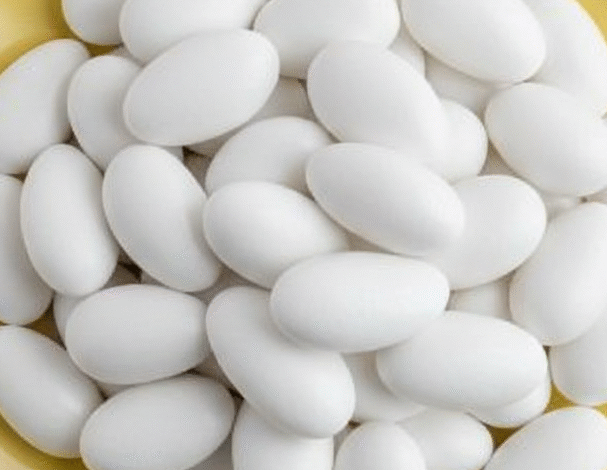
Classic Jordan Almonds: Wheatless Sugar-Coated Almond Enchantments
Jordan almonds — also called confetti in Italian, koufeta in Greek, and peladillas in Spanish — are whole almonds coated in a hard sugar shell. They’ve been used at weddings and celebrations across the Mediterranean and Middle East for centuries, traditionally given in odd numbers (usually five) to represent health, wealth, happiness, fertility, and long life. The bittersweet combination of the almond and the sweet coating is said to symbolize the mix of bitter and sweet in life.
Making them at home requires a candy thermometer — the sugar syrup needs to reach a precise temperature for the coating to harden correctly. Too low and the shells stay sticky; too high and they become brittle or crack.
Ingredients
- 200g whole raw almonds (blanched for a smooth white appearance, unblanched for a more rustic look)
- 150g granulated sugar
- 80ml water
- 1 teaspoon almond extract (optional)
- Gel food coloring in your chosen color (optional — gel rather than liquid to avoid diluting the syrup)
Equipment
- Heavy-bottomed saucepan
- Candy thermometer
- Wooden spoon
- Parchment-lined baking sheet
- Large heatproof bowl
A Note on Blanching
Blanched almonds produce the classic smooth, white Jordan almond appearance. To blanch at home: drop raw almonds into boiling water for 1 minute, drain, then transfer immediately to a bowl of cold water. Pinch each almond between your fingers to slip the skin off. Spread on a towel and dry completely before using — any moisture will affect the sugar coating.
Instructions
Step 1 — Prep your workspace Line a baking sheet with parchment paper and place it nearby. Have your almonds measured and ready. Once the syrup is ready it moves quickly.
Step 2 — Make the sugar syrup Combine sugar and water in a heavy-bottomed saucepan over medium heat. Stir gently until the sugar is fully dissolved — this is the only time you should stir. Once dissolved, stop stirring completely and attach your candy thermometer.
Step 3 — Cook to temperature Bring the syrup to a boil without stirring. Cook until it reaches 239–244°F (115–118°C) — the soft-crack stage. You can verify without a thermometer by dropping a small amount into a glass of cold water: at this stage it should form a firm but slightly pliable ball. If it’s too soft, keep cooking; if it snaps rigid, it’s gone too far.
Step 4 — Add flavoring and color Remove from heat. Stir in almond extract if using, and add gel food coloring a small amount at a time, stirring quickly to incorporate evenly before the syrup starts to set.
Step 5 — Coat the almonds Add the almonds to the syrup all at once and stir continuously with a wooden spoon. The syrup will first look glossy and then begin to turn white and grainy as it crystallizes around the almonds — this is correct. Keep stirring until every almond is coated and the sugar has fully crystallized and dried.
Step 6 — Spread and separate Pour the coated almonds onto the parchment-lined baking sheet. Working quickly while they’re still warm, use a spatula or two forks to separate any almonds that are stuck together. Once they cool they’re much harder to pull apart.
Step 7 — Cool completely Leave undisturbed for 30–40 minutes in a dry spot until the shells are fully hardened and set.
Tips
- Don’t stir the syrup after the sugar dissolves — stirring causes crystallization in the pot, which produces a grainy rather than smooth coating
- If you see sugar crystals forming on the sides of the saucepan during cooking, brush them down with a pastry brush dipped in water
- Humidity is the enemy of sugar work — avoid making these on a humid day if possible, and store in a dry container
- Work fast when separating the almonds — they set quickly as they cool
- Gel food coloring gives more vibrant, consistent color than liquid and doesn’t affect the syrup’s water content
Variations
- Rosewater: Add ½ teaspoon of rosewater instead of almond extract for a Middle Eastern flavor
- Other nuts: The same technique works with hazelnuts or pistachios
- Spiced: Add a pinch of cardamom or cinnamon to the syrup with the almonds
- Pastel assortment: Make multiple small batches in different colors — pink, blue, mint, and white are traditional wedding combinations
Traditional Uses
Jordan almonds are typically given in odd numbers at weddings, baptisms, and other celebrations. Five is the most common number, representing the five wishes for the couple or the guest of honor. They’re usually wrapped in small squares of tulle or organza and tied with ribbon, or placed in small decorative boxes as party favors.
Storage
- Airtight container at room temperature: up to 2 weeks — include a silica gel packet to absorb any moisture if your environment is humid
- Freezer: up to 3 months in a sealed bag — thaw at room temperature before serving
Nutritional Information (per 30g serving, approximate — makes about 200g)
| Nutrient | Amount |
|---|---|
| Calories | ~120 kcal |
| Carbohydrates | ~18 g |
| Sugar | ~14 g |
| Fat | ~5 g |
| Protein | ~3 g |
✓ Gluten-Free ✓ Wheat-Free ✓ Dairy-Free ✓ Vegan
Recipe Details
- Cuisine: Mediterranean / European
- Course: Confection / Wedding Favor
- Skill Level: Intermediate
Frequently Asked Questions
Why are my Jordan almonds sticky? The syrup didn’t reach the correct temperature. Below 239°F the sugar retains too much moisture and the coating won’t dry to a hard shell. Use a thermometer and make sure you reach the full temperature range before adding the almonds.
Why is the coating grainy or dull instead of smooth? Stirring the syrup after the sugar has dissolved causes premature crystallization, which produces a grainy texture. Stop stirring once the sugar dissolves and don’t touch the syrup again until it’s time to add the almonds. Sugar crystals forming on the pan sides can also cause this — brush them down with a wet pastry brush during cooking.
Why did my almonds clump together? They weren’t separated quickly enough after pouring onto the baking sheet. Work fast while they’re still warm — once the sugar cools and hardens, stuck almonds are very difficult to separate without cracking the shells.
Can I make these without a candy thermometer? You can use the cold-water test — drop a small amount of syrup into cold water and check the consistency. At the right stage (soft-crack) it forms a firm but slightly pliable ball. That said, a candy thermometer is inexpensive and takes the guesswork out of sugar work entirely.
How many should I give per guest at a wedding? The traditional number is five, representing health, wealth, happiness, fertility, and long life. Some traditions use other odd numbers — three or seven — but five is most common across Mediterranean wedding customs.