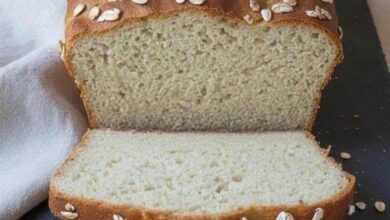
This millet bread recipe is one of the best introductions to wheat-free baking there is. Millet flour has a mild, slightly nutty flavour and produces a tender, moist crumb without the gummy texture that trips up so many gluten-free loaves. No yeast. No kneading. No proofing time. Just a single bowl, eleven ingredients, and 45 minutes in the oven. The result is a sliceable loaf that works beautifully for toast, sandwiches, and soup, keeps for three days at room temperature, and freezes slice by slice for the rest of the month. This is the wheat-free millet bread recipe that earns a permanent place in the rotation.
Wheat-FreeGluten-FreeVegetarianDairy-Free OptionVegan OptionNo YeastKeeps 3 Days
What Makes This Millet Bread Recipe Worth Baking
Most wheat-free bread recipes fall into one of two traps: they rely entirely on a commercial all-purpose gluten-free blend, which produces a loaf with a slightly artificial texture and very little flavour of its own, or they use a single grain flour that bakes up dense and dry. This millet bread recipe takes a different approach. Millet flour is the primary base, contributing a mild nuttiness and a genuinely tender crumb that most gluten-free loaves cannot match. Certified gluten-free oat flour is added to soften the texture further and balance millet’s slight graininess. Ground flaxseed pulls everything together as a natural binder, replacing the structural role that gluten would normally play.
The result is a quick bread that requires no specialist equipment, no xanthan gum, and no yeast. It bakes in a standard loaf tin in 40 to 45 minutes and produces a sliceable, moist loaf that tastes genuinely good rather than merely wheat-free. Toasted the morning after baking, this millet bread recipe delivers one of the most satisfying wheat-free breakfast experiences in the repertoire, and it is completely, inherently wheat-free from first ingredient to last.
|
10–12 Slices |
55 Total Minutes |
100% Wheat-Free |
3 Days Shelf Life |
0g Wheat Flour |
The Ingredients That Make This Millet Bread Recipe Work
Millet Flour: The Wheat-Free Base That Delivers Real Flavour
Millet is an ancient grain cultivated for thousands of years across Africa and Asia. It is naturally gluten-free, higher in protein than rice flour, and has a lower glycaemic index than most other gluten-free flours. Its mild, slightly nutty flavour makes it one of the most pleasant-tasting wheat-free baking flours available, contributing genuine character to the finished loaf rather than a neutral starch base. In this millet bread recipe, millet flour does the majority of the structural work, producing a crumb that is tender without being dense and flavourful without being overpowering. The single thing that matters most on the bag is the grind: always buy finely milled millet flour. Coarse-ground millet flour produces a gritty, sandy texture in the finished loaf that no amount of technique will correct.
Where to Find Millet Flour Most health food stores, well-stocked supermarkets, and online retailers carry finely milled millet flour. Bob’s Red Mill and Arrowhead Mills both produce widely available versions. If you can only find coarse-ground millet flour, blend it briefly in a high-powered blender or food processor before measuring. You can also make millet flour from scratch by blending whole millet grains until powdery, which is the freshest and cheapest option. |
Certified Gluten-Free Oat Flour: The Crumb Softener
Oat flour works alongside the millet flour in this recipe to soften the crumb and balance millet’s slight natural graininess. The oats bring a gentle sweetness and a more familiar bread-like texture that makes this loaf feel approachable rather than overtly health-food. The label matters here: always buy oat flour labelled certified gluten-free, as standard oat flour is frequently contaminated with wheat during processing. For anyone with celiac disease or significant wheat sensitivity, uncertified oat flour is not a safe substitute regardless of what the primary ingredient label says.
Ground Flaxseed: The Natural Binder
Ground flaxseed does two jobs in this millet bread recipe simultaneously. First, it acts as a natural binder, replacing some of the structural work that gluten would normally provide in a wheat loaf. Second, it retains moisture through the bake, keeping the crumb tender and preventing the dry, crumbly result that afflicts many gluten-free breads after the first day. Do not reduce or omit it. A quarter cup is the minimum needed for both functions. Ground flaxseed is completely wheat-free, widely available, and adds a small but meaningful amount of omega-3 fatty acids to every slice.
Label Check Millet flour and ground flaxseed are both naturally wheat-free, but cross-contamination during processing is possible at some facilities. For anyone with celiac disease, always look for a certified gluten-free symbol on both. The same applies to the oat flour, which carries particular cross-contamination risk in non-certified production. The baking powder should also be checked: most plain baking powder is wheat-free, but some brands use shared equipment. Ensure your buttermilk or dairy-free yogurt is plain and unflavoured, as some flavoured varieties contain wheat-derived thickeners. |
Buttermilk, Eggs, and Oil: The Moisture and Rise
Buttermilk provides both the liquid the flours need to hydrate and a gentle acidity that activates the baking soda and produces a good rise. Plain dairy-free yogurt, such as coconut or almond yogurt, is a direct and effective substitute that works just as well in this millet bread recipe without altering the flavour significantly. Two room-temperature eggs provide binding, lift, and richness. Cold eggs do not incorporate as smoothly and can cause the batter to separate slightly. Olive oil or melted coconut oil carries flavour and keeps the crumb moist from day one to day three. All four are naturally wheat-free.
| “The best wheat-free bread recipes do not try to imitate a wheat loaf. They build on what their ingredients naturally do well. This millet bread recipe makes the most of millet’s nuttiness, flaxseed’s binding, and oat flour’s softness, and the result tastes like itself, not like a compromise.” |
Full Recipe Wheat-Free Millet BreadA quick wheat-free millet bread recipe using millet flour, gluten-free oat flour, and ground flaxseed. No yeast, no kneading, no proofing. Moist, sliceable, and ready in 55 minutes. Keeps 3 days, freezes for 2 months. | |||||||||||||||||||||||||||||||||||||||||||||||||||
| |||||||||||||||||||||||||||||||||||||||||||||||||||
Wheat-FreeGluten-FreeVegetarianNo Wheat FlourDairy-Free OptionVegan Option ✓ | |||||||||||||||||||||||||||||||||||||||||||||||||||
Ingredients The Dry Mix
The Wet Mix
Equipment
| Instructions
Nutrition Per Slice (approx., makes 10–12 slices)
| ||||||||||||||||||||||||||||||||||||||||||||||||||
Storage Guide: How to Keep This Millet Bread at Its Best
Store at room temperature, wrapped in a clean kitchen towel and placed inside an airtight container, for up to three days. The kitchen towel is not optional: it absorbs any residual moisture that would otherwise condense inside the container and make the crust soggy. Do not refrigerate the loaf, as refrigeration dries gluten-free bread out significantly faster than room temperature storage.
For longer storage, slice the completely cooled loaf, wrap each slice individually in cling film, and freeze for up to two months. Toast slices directly from frozen for 1 to 2 minutes. Frozen slices of this millet bread recipe reheat beautifully and often taste better toasted from frozen than fresh from the oven, because the toaster restores a crisp crust that the cooling process softens.
Flour Measuring Tip Always measure flour by spooning it lightly into the measuring cup and levelling with a knife. Scooping the cup directly into the flour bag compacts it and adds up to 30% more flour by weight, which is the single most common cause of a dense, dry millet bread. If you have a kitchen scale, use it: 1½ cups of millet flour is approximately 180g and 1 cup of oat flour is approximately 90g. |
Recipe Variations
|
|
|
|
Frequently Asked Questions
Why is my millet bread gummy inside? Either it was sliced before cooling fully, or it was underbaked. Gluten-free breads need significantly longer cooling time than wheat loaves because the starches continue to set and firm as the loaf cools. Wait at least 30 minutes before slicing. If the toothpick test shows clean but the interior is still gummy after a full cooling period, add 5 minutes to the bake time next batch. Every oven runs differently and the 40 to 45 minute range is a starting point, not a fixed rule. |
Why is my millet bread dense? The three most common causes are over-packed flour (always spoon and level rather than scoop), overmixing after combining wet and dry ingredients, or baking powder that has lost its potency. Test baking powder freshness by dropping a small amount in warm water. It should bubble vigorously and immediately. Flat or slow fizzing means it needs replacing before you bake. |
Can I use just millet flour without the oat flour in this recipe? You can, but the texture will be slightly grainier and drier. The oat flour softens the crumb and balances millet’s natural texture. If you need the recipe to be oat-free, an equal amount of sorghum flour or a certified gluten-free all-purpose flour blend makes a reasonable substitute. Sorghum flour has a mild flavour similar to millet and produces a comparable result without significantly changing the character of the loaf. |
How is millet flour different from other gluten-free flours? Millet flour has more flavour than starch-based gluten-free flours such as tapioca or potato starch: it contributes a mild nuttiness rather than a neutral base. It also has more protein and fibre than rice flour and a lower glycaemic index than most other gluten-free baking flours. The trade-off is that it can produce a slightly grainy texture if coarsely ground, which is why finely milled flour is specified in this millet bread recipe. |
Can I make this millet bread recipe without eggs? Yes. Flax eggs work reliably here. Mix 1 tablespoon of ground flaxseed with 3 tablespoons of water per egg, stir, and leave for 5 minutes until gel-like before using. The loaf will be slightly denser than the egg version but still holds together well and slices cleanly. Use dairy-free yogurt in place of buttermilk to make the whole recipe fully vegan. |
Is this millet bread recipe suitable for someone with celiac disease? Yes, provided you use certified gluten-free versions of the oat flour and millet flour. Both grains are naturally gluten-free but are frequently processed in facilities that also handle wheat, barley, and rye. For anyone with celiac disease, the certified gluten-free label on both is not optional. All other ingredients in this recipe, including flaxseed, baking powder, baking soda, oil, eggs, and maple syrup, are naturally gluten-free in their plain, unflavoured forms. |
The Verdict
This millet bread recipe is not a compromise loaf that you make because you have to avoid wheat. It is a genuinely good loaf that you will make because it tastes better than most gluten-free breads on the market and better than many you could bake with wheat flour. The millet flour delivers real flavour. The flaxseed keeps it moist for three days. The oat flour softens the crumb into something that actually slices and toasts the way bread should.
One bowl. Eleven ingredients. Fifty-five minutes. No yeast, no kneading, no specialist equipment. Make this millet bread recipe on a Sunday and it will carry you through to Wednesday without a single slice that disappoints.
| If you made this millet bread recipe, pin it to your wheat-free baking board and share with your followers. Every save helps another home cook discover that wheat-free bread does not have to be a trade-down. |