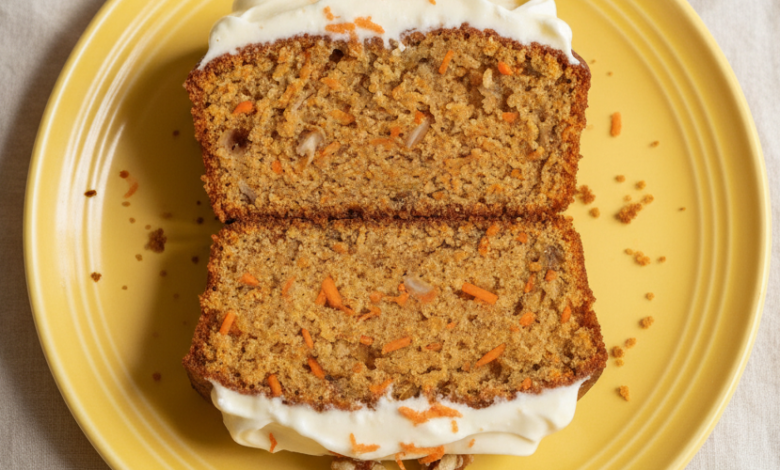
This wheat-free carrot cake is one of the most naturally adaptable bakes in the gluten-free repertoire, and one of the most rewarding. The grated carrots add moisture and structure that most cakes depend on wheat flour to provide, which means the carrot cake adapts to a gluten-free flour blend without sacrificing anything in the process. The result is a deeply spiced, exceptionally moist carrot cake with a tangy cream cheese frosting that balances the sweetness perfectly. It bakes as a two-layer celebration cake or a single-layer traybake depending on what the occasion calls for, and it genuinely tastes better the day after baking. This is the wheat-free carrot cake worth making every time.
Wheat-FreeGluten-FreeVegetarianDairy-Free OptionNo Wheat Flour12 SlicesKeeps 4 Days
What Makes This the Wheat-Free Carrot Cake Worth Baking
Carrot cake is the ideal starting point for wheat-free baking, because the carrot does work that wheat flour usually takes credit for. Finely grated carrots fold moisture directly into the batter, provide natural sweetness alongside the spices, and give the crumb a structure that holds together through baking, slicing, and a few days in the refrigerator. The wheat-free flour blend steps in for binding and lift, but it is not carrying the recipe on its own the way it would need to in a plain sponge or a pound cake. This is why a well-made gluten-free carrot cake is genuinely indistinguishable from a wheat version in everything that matters: texture, moisture, and flavour.
The spice combination of cinnamon, ginger, and nutmeg is the flavour backbone of this carrot cake, and it deepens overnight as the warm spices have time to fully integrate. Neutral oil rather than butter keeps the crumb moist from day one to day four, which matters when the cake is stored in the refrigerator between servings. The cream cheese frosting is tangy enough to cut through the sweetness and rich enough to feel like a proper celebration cake. This wheat-free carrot cake works for a weeknight dessert cut from the tray, or as a two-layer centrepiece frosted from edge to edge for a gathering. Either way, it is simply a very good carrot cake that happens to contain no wheat.
| 12 Slices | 55 Total Minutes | 100% Wheat-Free | 4 Days Shelf Life | 0g Wheat Flour |
The Ingredients That Make This Carrot Cake Work
Finely Grated Carrots: The Ingredient That Makes This Cake Wheat-Free Friendly
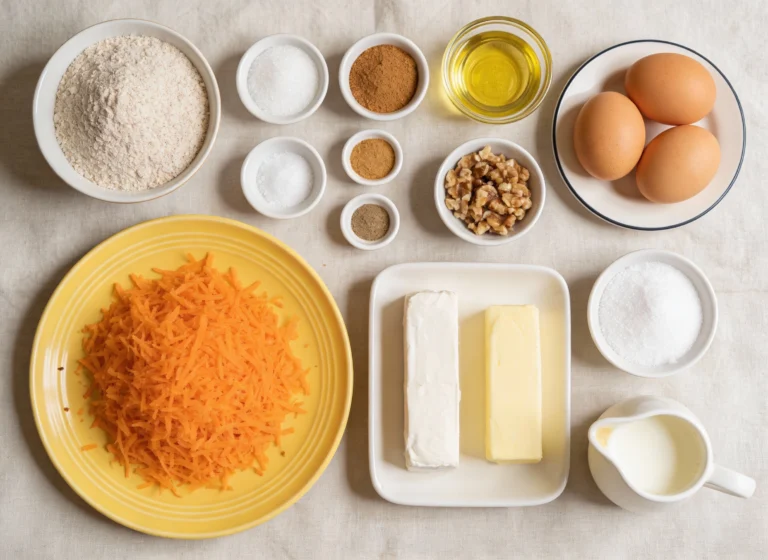
The carrots in this recipe are not decorative. They are doing the structural and moisture work that wheat flour typically handles in a conventional sponge. Finely grated carrots fold into the batter and distribute moisture evenly through the crumb, which is what keeps this gluten-free carrot cake tender and sliceable rather than dry or crumbly. The grind matters: fine gratings integrate completely into the batter and become invisible in the finished cake, contributing moisture and sweetness without any noticeable shreds of vegetable. Coarse gratings remain visible and produce a slightly denser, heavier crumb. Use a microplane or the fine side of a box grater and measure after grating rather than before. Four medium carrots will give you the 2½ to 3 cups this recipe requires.
The Make-Ahead Rule This wheat-free carrot cake genuinely tastes better the day after baking. The cinnamon, ginger, and nutmeg deepen and integrate overnight, and the crumb settles into a denser, moister texture that is significantly more satisfying than a freshly baked slice. If you are making this for a gathering, bake the day before, store covered in the refrigerator, and frost on the day. The result will be a better cake than if you baked and served the same day. |
Neutral Oil: The Moisture That Persists for Four Days
Neutral oil, such as sunflower, canola, or light olive oil, is the right choice over butter in this carrot cake recipe. Butter produces a slightly richer flavour but solidifies in the refrigerator, making refrigerated slices harder and drier than they should be. Oil stays liquid at refrigerator temperature, which means the crumb of this carrot cake remains moist and tender from day one to day four without any difference between a fresh slice and one pulled from the fridge on the fourth morning. This is the single most practical reason to choose oil over butter in any cake that will be stored cold and eaten over several days.
Gluten-Free All-Purpose Flour Blend: The Binding That Holds It Together
For this carrot cake, a gluten-free all-purpose flour blend that contains xanthan gum is the only flour that produces the right result in a direct swap. The xanthan gum provides the binding that gluten would normally supply, giving the batter enough cohesion to rise evenly and hold its structure through the bake and the cooling period. Blends labelled “1-to-1” or “measure-for-measure,” such as Bob’s Red Mill 1-to-1 or King Arthur Measure for Measure, are formulated for exactly this kind of bake and produce a consistent result. Do not use single-grain flours such as almond flour or rice flour alone: they produce a very different cake that requires significant reformulation of the entire recipe.
Label Check Gluten-free flour blends are inherently wheat-free, but look for a certified gluten-free symbol if cooking for someone with celiac disease, as some blends are produced in shared facilities. The same applies to the baking powder: most plain baking powder is wheat-free, but a small number of brands process on shared equipment. Also check the cream cheese: plain, full-fat cream cheese is wheat-free, but flavoured varieties occasionally contain wheat-derived stabilisers. Always use plain cream cheese for the frosting. |
Cream Cheese Frosting: The Tangy Finish That Completes the Cake
The cream cheese frosting on this carrot cake is not a decoration. It is the counterbalance that makes the spiced, sweet cake taste complete. Full-fat cream cheese at room temperature beats smoothly with softened unsalted butter into a light, airy frosting that is rich without being heavy, and tangy enough to cut through the sweetness of the cake beneath it. Start with three cups of icing sugar and add more only if needed. The cream cheese tang becomes harder to detect as more sugar is added, and a frosting that is too sweet will overwhelm the spice notes that define this carrot cake. Both cream cheese and plain butter are completely, inherently wheat-free.
| “Carrot cake is the wheat-free baker’s best friend. The carrots do the moisture work that wheat flour usually claims credit for. The result is a cake that does not need wheat to be extraordinary, because the carrots, the spices, and the cream cheese frosting were always going to be enough.” |
Full Recipe Wheat-Free Carrot Cake with Cream Cheese FrostingA deeply spiced wheat-free carrot cake made with finely grated carrots, neutral oil, and a gluten-free flour blend. Topped with a tangy cream cheese frosting. Works as a two-layer celebration cake or a single-layer traybake. Makes 12 slices. Keeps 4 days. | |||||||||||||||||||||||||||||||||||||||||||||||||||||||||||||||||||||||
| |||||||||||||||||||||||||||||||||||||||||||||||||||||||||||||||||||||||
Wheat-FreeGluten-FreeVegetarianNo Wheat FlourDairy-Free OptionKeeps 4 Days ✓ | |||||||||||||||||||||||||||||||||||||||||||||||||||||||||||||||||||||||
Ingredients The Carrot Cake
Optional Add-Ins
Cream Cheese Frosting
| Instructions
Nutrition Per Slice (approx., serves 12)
| ||||||||||||||||||||||||||||||||||||||||||||||||||||||||||||||||||||||
Storage Guide: How to Keep This Carrot Cake at Its Best
Because of the cream cheese frosting, this carrot cake must be stored in the refrigerator. Keep it covered in an airtight container for up to four days. The flavour genuinely improves over the first 24 hours as the spices deepen and the frosting firms into a dense, tangy layer that contrasts more distinctly with the moist crumb beneath it. A slice of this carrot cake on day two is better than a slice on day one.
For longer storage, slice the fully frosted and chilled cake, wrap individual slices in cling film or parchment, and freeze in an airtight bag for up to two months. Thaw overnight in the refrigerator and bring to room temperature for 20 minutes before eating. The frosting softens back to its original texture and the cake crumb stays moist through the freeze and thaw without any loss of quality.
Flour Measuring Tip Always spoon gluten-free flour lightly into your measuring cup and level with a knife. Scooping the cup directly into the flour bag compacts it significantly and can add up to 30% more flour by weight, which is the single most common cause of a dense, dry carrot cake. If you have a kitchen scale, use it: 2¼ cups of gluten-free flour blend is approximately 270 to 280g depending on the brand. |
Recipe Variations
|
|
|
|
Frequently Asked Questions
Can I make this carrot cake a day ahead? Yes, and it is actively recommended. The flavour of this carrot cake improves overnight as the cinnamon, ginger, and nutmeg have time to deepen and integrate. Bake and frost the day before, store covered in the refrigerator, and it will be noticeably better the next day than it was fresh from the oven. This also makes it an ideal make-ahead dessert for gatherings. |
Can I substitute almond flour for the gluten-free blend? You can replace a portion of the gluten-free flour blend with almond flour for added richness and a slightly denser crumb, but replacing all of it changes the structure significantly. A full almond flour carrot cake requires a different ratio of eggs and leavening to hold together cleanly. For this recipe, use a 1-to-1 or measure-for-measure blend with xanthan gum as written for the most reliable result. |
Is the cream cheese frosting very sweet? It is on the sweeter side, as cream cheese frostings tend to be. Start with 3 cups of icing sugar and add more only if the consistency requires it. The cream cheese tang is what balances the sweetness, so adding too much sugar progressively diminishes the flavour distinction that makes cream cheese frosting work on a spiced carrot cake. |
Why is my carrot cake dense? The three most common causes are over-packed flour (spoon and level rather than scoop), overmixing after combining wet and dry ingredients, and stale baking powder. Test baking powder freshness by dropping a small amount in warm water: it should bubble vigorously. Flat or slow fizzing means it needs replacing. A dense carrot cake is almost always one of these three problems. |
How do I get clean slices? Refrigerate the frosted carrot cake for at least 30 to 60 minutes before cutting. Use a sharp, non-serrated knife dipped in warm water and wiped clean between each cut. Press straight down rather than dragging the blade. A chilled, firmly set frosting produces clean edges. A frosting that is too soft at room temperature will smear when cut regardless of how sharp the knife is. |
The Verdict
This wheat-free carrot cake is not asking anything of you that a conventional carrot cake would not. The technique is identical, the ingredients are familiar, and the result is a cake that earns its place at any table, wheat-free or not. The carrots do the moisture work. The spices do the flavour work. The cream cheese frosting does the finishing work. Nothing about this carrot cake announces itself as gluten-free until someone asks.
Twelve slices. Four days of keeping. Completely wheat-free. Make this carrot cake the day before you plan to serve it and it will be one of the best things on the table.
| If you made this wheat-free carrot cake, pin it to your desserts board and share with your followers. Every save helps another home baker discover that wheat-free baking does not ask you to miss the things that matter most. |