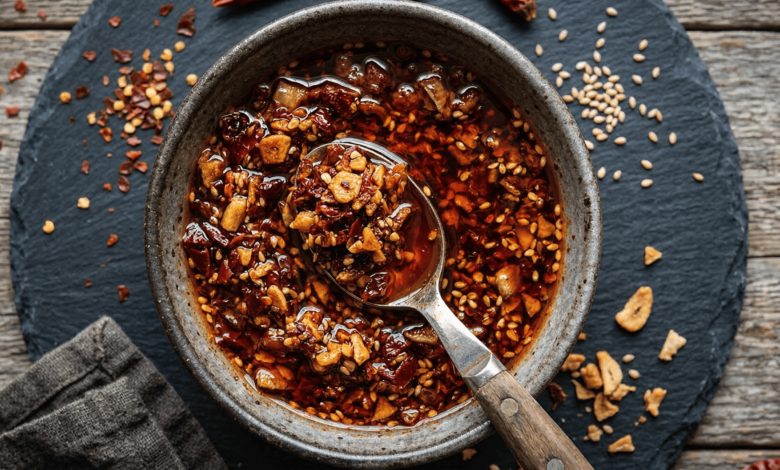
If you have ever reached for a jar of store-bought chilli crisp, flipped it over, and found wheat on the label, this is the recipe that ends that problem permanently. This Homemade Wheat-Free Chilli Crisp Oil uses eight clean ingredients, one small saucepan, and thirty minutes. The result is a deeply savoury, crunchy, slow-burning condiment that outperforms every commercial version on the shelf, with zero wheat, zero hidden additives, and complete control over every element. One jar lasts a month. You will wish you had made two.
Wheat-FreeDairy-FreeVegan8 IngredientsAdjustable Heat30 Minutes1-Month Shelf Life
What Makes This Condiment a Wheat-Free Kitchen Essential
Chilli crisp is the most talked-about condiment of the last five years, and for good reason. The combination of fragrant chilli-infused oil, crispy fried shallots and garlic, toasted sesame seeds, and the deep savouriness of wheat-free soy sauce creates something that is genuinely unlike any other condiment. It is at once crunchy and silky, fiery and aromatic, intensely savoury and subtly sweet. A single spoonful transforms a bowl of plain rice into something worth eating. A drizzle over eggs makes breakfast feel like a restaurant meal.
The problem is that virtually every commercial chilli crisp, including the most popular brands, contains wheat. The soy sauce used in most recipes is brewed with wheat, and many brands add wheat-derived thickeners or flavour enhancers. This homemade version replaces every wheat-containing ingredient with a clean, certified wheat-free alternative, primarily tamari in place of regular soy sauce, without changing the flavour profile in any meaningful way. It is completely wheat-free by design, not by compromise.
| 8 Ingredients | 30 Total Minutes | 100% Wheat-Free | 1 mo. Shelf Life | 1 Saucepan |
The Ingredients That Make This Condiment Work
Dried Chilli Flakes: The Heart of the Crisp
The chilli flakes you choose define the flavour character of the entire jar. Gochugaru, the Korean coarse chilli flake, is the gold standard. It delivers a fruity, mildly smoky heat that builds slowly rather than hitting all at once, and produces the deep brick-red colour that makes chilli crisp so visually striking. Aleppo pepper is an excellent alternative with slightly more sweetness and less heat. Avoid standard supermarket chilli flakes for this recipe. They are too sharp, too one-dimensional, and produce a duller colour. Both gochugaru and Aleppo pepper are completely wheat-free with no processing risk.
Label Check The critical ingredient to verify in this recipe is the tamari. Most tamari is brewed without wheat, but not all. Some brands include small amounts of wheat in the brewing process. Always look for tamari labelled 100% wheat-free or certified gluten-free. San-J and Kikkoman both produce clearly labelled wheat-free tamari that is widely available. Do not substitute regular soy sauce. It contains wheat by default. |
Neutral Oil: The Vehicle for Everything
A high-smoke-point neutral oil, such as sunflower, avocado, or refined coconut oil, is the base that carries and preserves all the other flavours. The oil is heated to a precise temperature before being poured over the chilli mixture, which simultaneously blooms the chilli flakes, crisps the shallots and garlic that were fried earlier, and extracts every fat-soluble flavour compound in the bowl. The temperature of this pour is the single most important technique in the recipe. Too cool and nothing blooms. Too hot and the chilli flakes burn, turning the oil bitter and dark.
Crispy Shallots and Garlic: The Crunch That Defines the Crisp
This is what separates chilli crisp from plain chilli oil: the crispy fried shallots and garlic suspended in every spoonful. Thinly sliced shallots and garlic are fried in the same oil at low-medium heat until deeply golden and crisp, then removed and set aside. They are added back into the finished condiment, where they retain their crunch for weeks in the sealed jar. They add texture, depth, and the mellow sweetness of well-cooked alliums, a flavour dimension that no liquid condiment can replicate.
The Temperature Rule When you pour the hot oil over the chilli mixture, the oil should be between 160 and 180°C (320 to 356°F). This is the window that blooms the chilli without burning it. A kitchen thermometer is the reliable method. Without one, drop a single chilli flake into the oil. If it sizzles vigorously but does not immediately blacken, the temperature is right. Too little sizzle means not hot enough. Immediate darkening means too hot, so let it cool for one minute. |
Tamari, Sesame Seeds, and Sugar: The Seasoning Layer
Wheat-free tamari adds a deeply savoury, umami-rich backbone that plain chilli oil completely lacks. A small amount of sugar, white or cane, both fully wheat-free, balances the heat and enhances the overall depth of flavour without making the condiment taste sweet. Toasted sesame seeds add a nutty, slightly bitter counterpoint and additional texture. These three ingredients, combined with the crispy shallots and garlic and the bloomed chilli flakes, create the complete flavour profile that has made chilli crisp a permanent fixture on tables worldwide.
| “Every jar of store-bought chilli crisp I looked at had wheat somewhere on the label. The homemade version is cleaner, better flavoured, and costs a third of the price. There is no version of this where buying it makes more sense.” |
Full Recipe Homemade Wheat-Free Chilli Crisp OilCrispy fried shallots and garlic suspended in bloomed gochugaru chilli oil, seasoned with wheat-free tamari, sesame seeds, and a touch of sugar. Wheat-free, dairy-free, vegan, and ready in 30 minutes. The only condiment that makes everything better. | |||||||||||||||||||||||||||||||||||||||||||||||||
| |||||||||||||||||||||||||||||||||||||||||||||||||
Wheat-FreeVeganDairy-FreeNo Hidden Wheat1-Month Shelf LifePantry Staple ✓ | |||||||||||||||||||||||||||||||||||||||||||||||||
Ingredients The Crisp Base
Equipment
| Instructions
Nutrition Per Tablespoon (approx.)
| ||||||||||||||||||||||||||||||||||||||||||||||||
Storage and Shelf Life Guide
Chilli crisp stores at room temperature in a sealed glass jar for up to one month, provided your jar was properly sterilised and the oil was fully cooled before sealing. The oil acts as a natural preservative, keeping the crispy alliums and chilli flakes safe from moisture and spoilage. Keep the jar in a cool, dark cupboard away from direct sunlight, which can degrade the oil and dull the colour over time.
Refrigeration extends the shelf life to two months, though the oil will solidify in the cold. This is completely normal. Simply bring the jar to room temperature for 10 to 15 minutes before using and it will return to its normal pourable consistency. Never microwave it.
Gift Idea A 150ml jar of homemade wheat-free chilli crisp with a handwritten label, “No wheat. All heat.”, is one of the most impressive, most useful, and most appreciated food gifts you can give. Double the batch easily in a single session. It scales perfectly and takes no extra effort beyond a larger jar. |
10 Ways to Use Chilli Crisp in a Wheat-Free Kitchen
This condiment earns permanent counter space by being the most versatile jar in the kitchen. Here is how it performs across a wheat-free day:
- Fried egg finish — one spoonful over a fried egg on rice is the most-shared use for good reason. It is perfect, every single time.
- Noodle bowls — stir a tablespoon through wheat-free rice or buckwheat noodles for instant depth. No other seasoning needed.
- Dumpling dipping sauce — mix with a splash of wheat-free tamari and rice vinegar for a sauce that outperforms anything store-bought.
- Avocado toast — drizzle over smashed avocado on wheat-free bread with a squeeze of lemon. The crispy bits add texture the avocado otherwise lacks.
- Roasted vegetables — toss cauliflower, broccoli, or sweet potato in chilli crisp before roasting. The oil coats and caramelises beautifully.
- Stir-fry sauce base — one tablespoon replaces an entire seasoning blend. Add to any wheat-free stir-fry in the final 30 seconds of cooking.
- Pizza drizzle — the same principle as spicy honey but more savoury, exceptional on wheat-free pizza with cheese and mushrooms.
- Grilled protein glaze — brush over chicken, salmon, or tofu in the last 2 minutes of cooking for a deeply savoury, caramelised crust.
- Soup finish — a half-teaspoon swirled into a bowl of miso soup or wheat-free ramen transforms the flavour completely.
- Popcorn topping — drizzle over freshly popped corn and toss. The oil coats every kernel and the crispy bits distribute throughout. It is extremely addictive.
Recipe Variations
|
|
|
|
Frequently Asked Questions
Why does store-bought chilli crisp contain wheat? Most commercial chilli crisp recipes use standard soy sauce as a seasoning component, and standard soy sauce is brewed with wheat. Some brands also add wheat-derived thickeners or flavour enhancers to extend shelf life or adjust texture. This is why it is important to read the label even on products that appear to be just oil and chilli. Wheat can appear in unexpected seasoning components. Making it at home with certified wheat-free tamari eliminates the problem entirely. |
Can I use regular chilli flakes instead of gochugaru? Technically yes, but the result will be noticeably different. Standard chilli flakes are sharper, hotter, and lack the fruity, slightly sweet character of gochugaru. The finished oil will be less nuanced and the colour will be less vibrant. Gochugaru is now available in most supermarkets and online, and it is worth seeking out for this recipe. Aleppo pepper is the best widely-available alternative if gochugaru is unavailable. |
My chilli flakes burned. What went wrong? The oil was too hot when poured. This is the most common mistake. If your finished oil has a bitter, acrid taste and is very dark rather than brick-red, the chilli flakes burned during the bloom. Unfortunately, burned chilli oil cannot be rescued. The bitterness permeates the entire batch. For your next attempt, let the oil cool slightly after removing the shallots and garlic, target 160 to 170°C precisely, and pour slowly rather than all at once. |
How long do the shallots and garlic stay crispy in the jar? When stored correctly in a sealed jar, the crispy alliums retain their crunch for the full one-month shelf life at room temperature, or two months refrigerated. The oil environment prevents moisture from reaching them, which is what causes sogginess. The only thing that will make them go soft is introducing a wet spoon into the jar. Always use a clean, completely dry spoon when serving. |
Is this recipe suitable for someone with celiac disease? Yes, provided you use a tamari that is certified gluten-free, not just labelled wheat-free, as some tamari brands use shared facilities with wheat products. San-J Organic Tamari and Kikkoman Gluten-Free Tamari are both certified and widely available. All other ingredients in this recipe, including gochugaru, shallots, garlic, neutral oil, sesame seeds, sugar, and sea salt, are inherently gluten-free with no cross-contamination risk in their natural, unprocessed forms. |
The Verdict
Homemade Wheat-Free Chilli Crisp Oil is the condiment that belongs on every wheat-free kitchen counter, permanently. Eight ingredients, one saucepan, thirty minutes, and you have a jar of something that outperforms every commercial alternative, contains not a trace of wheat, and makes virtually everything it touches significantly better.
The crunch of the shallots and garlic. The deep brick-red colour of bloomed gochugaru. The umami backbone from wheat-free tamari. The slow, building heat that does not disappear after one bite. There is nothing else like it, and once you have made it once, the idea of paying for an inferior version that may contain hidden wheat will never make sense again.
| If you made this chilli crisp, pin it to your condiment board and share it with your followers. Every save helps another home cook find a wheat-free staple they will reach for every single day. |