Homemade Wheat-Free White Miso Tahini Dressing (7 Ingredients, 5 Minutes, 2-Week Fridge Life)

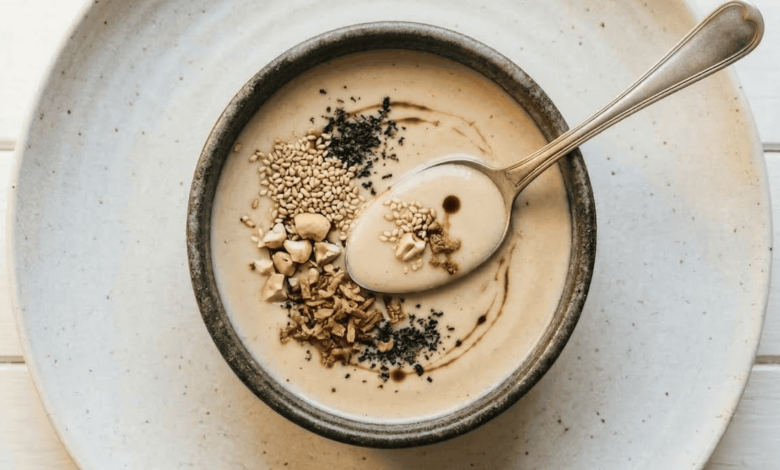
If you have been reaching for the same bottled dressings and quietly wondering whether any of them actually contain wheat — this is the recipe that replaces all of them permanently. This Homemade Wheat-Free White Miso Tahini Dressing uses seven ingredients, one jar, and five minutes. The result is a thick, creamy, deeply umami dressing that is simultaneously nutty, tangy, subtly sweet, and entirely unlike anything on a supermarket shelf. It keeps for two weeks in the refrigerator. It goes on everything. And it is completely wheat-free not because anything was swapped out, but because miso and tahini were always going to be better without it.
Wheat-FreeDairy-FreeVegan7 Ingredients2-Week Fridge Life5 MinutesFridge Staple
What Makes This Dressing a Wheat-Free Kitchen Essential
Miso has been building towards this moment for years. It started as a speciality ingredient for Japanese cooking, became a secret weapon in restaurant kitchens globally, and is now — in 2026 — the fastest-rising flavour in home condiment searches, outpacing sriracha and tahini individually in recipe platform growth for the first time. The reason is what miso does that no other single ingredient can replicate: it delivers instant umami depth — that fifth flavour, the savoury richness that makes food taste more like itself. A tablespoon of white miso in a dressing does what an hour of reducing a stock does to a sauce. It adds a dimension that was missing and makes everything underneath it taste better.
The wheat-free angle matters here more than it does for almost any other condiment, because miso is the ingredient that most frequently catches people out. Traditional miso is made with soybeans — naturally wheat-free — but many commercial varieties, particularly Japanese-style barley miso (mugi miso) and some blended pastes, are fermented with wheat as part of the koji starter culture. White miso (shiro miso), however, is almost always made with rice koji rather than wheat, making it the safest and most accessible choice for wheat-free cooking. This recipe specifies white miso not only because it is the gentlest, sweetest variety — ideal for a dressing — but because it is reliably wheat-free across the vast majority of brands when the label is read carefully. The result is a dressing that is genuinely, inherently wheat-free, deeply flavourful, and takes five minutes to build from scratch every time.
| 7 Ingredients | 5 Total Minutes | 100% Wheat-Free | 2 wks Fridge Life | 1 Jar Needed |
The Ingredients That Make This Dressing Work
White Miso Paste: The Ingredient That Does Everything
White miso — shiro miso in Japanese — is the mildest, sweetest member of the miso family. It is made from soybeans fermented with a relatively large proportion of rice koji and a short fermentation period, which produces a pale, creamy paste with a delicate, slightly sweet, and deeply savoury flavour profile that is far more accessible than the stronger red or barley misos. For a dressing, it is the ideal choice: its gentleness allows the tahini and lemon to be heard alongside it rather than being overwhelmed, and its natural sweetness means no additional sugar is required to balance the acidity. Two tablespoons per jar is the sweet spot — enough to deliver the full miso character without tipping the dressing into pure umami territory.
Label Check Not all miso is wheat-free. White miso (shiro miso) made with rice koji is almost always wheat-free — but always verify by reading the full ingredient list. Barley miso (mugi miso) is fermented with barley and is not wheat-free. Some blended or flavoured miso pastes add wheat starch as a thickener. Look for miso with an ingredient list that reads: soybeans, rice, salt — and nothing else. Hikari Organic White Miso and Clearspring White Miso are both widely available and consistently wheat-free. |
Tahini: The Creaminess That No Other Ingredient Can Replicate
Tahini — stone-ground roasted sesame seeds, nothing more — is the structural backbone of this dressing. It is what gives the finished product its thick, silky, pourable-but-coating consistency that clings to salad leaves and vegetable surfaces rather than pooling at the bottom of the bowl. The fat content of tahini emulsifies with the water and citrus in the recipe to produce a texture that rivals any cream- or yogurt-based dressing — without dairy, without wheat, and with a deep, roasted nuttiness that makes the dressing taste like it is more complex than it actually is. Use a good tahini: pale, runny, with no bitterness — Belazu and Seed and Mill are both excellent. Cheaper tahini can be thick, grainy, and bitter, and will produce a dressing that separates in the jar. Tahini is completely and inherently wheat-free.
Rice Vinegar and Lemon Juice: The Acidity That Lifts Everything
A dressing built on miso and tahini without acid is heavy and one-dimensional — rich and savoury with nowhere to go. Rice vinegar provides a gentle, clean acidity that is far less sharp than white wine vinegar or apple cider vinegar, making it the ideal match for the delicate white miso. A tablespoon of fresh lemon juice adds a bright citrus lift on top of the vinegar’s base acidity. Together, they turn the miso-tahini base from something that tastes like a paste into something that tastes like a dressing — lively, forward, with a finish that encourages the next bite. Both are completely wheat-free.
Consistency Tip Tahini seizes when it first comes into contact with water or acid — it will go thick and paste-like before it loosens again. This is normal and not a problem. Add the water one tablespoon at a time at the end and whisk or shake vigorously between each addition. The dressing will smooth out completely within 30–60 seconds of mixing. The target consistency is thick enough to coat the back of a spoon but loose enough to pour — similar to double cream. Refrigerated dressing will thicken further overnight; add a splash of water and shake before using. |
Garlic, Toasted Sesame Oil, and Maple Syrup: The Finishing Layer
One small clove of garlic — grated on a microplane rather than chopped, to distribute its flavour evenly through the dressing without leaving sharp chunks — adds the savoury backbone that lifts the miso’s umami into something more complex. A teaspoon of toasted sesame oil deepens the sesame note of the tahini and adds a warm, roasted character that makes the dressing smell as good as it tastes. A half-teaspoon of maple syrup — not enough to taste sweet, just enough to round the edges of the acidity — balances the whole jar into something cohesive. All three are completely and inherently wheat-free. The maple syrup can be replaced with a half-teaspoon of honey for a non-vegan version with an equally good result.
| “The best wheat-free condiments are the ones that were never supposed to contain wheat in the first place. White miso and tahini have been building flavour without it for centuries. This dressing just puts them in the same jar.” |
Full Recipe Homemade Wheat-Free White Miso Tahini DressingWhite miso and tahini whisked with rice vinegar, lemon juice, garlic, sesame oil, and maple syrup into a thick, creamy, deeply umami dressing. Wheat-free, dairy-free, vegan. Seven ingredients. Five minutes. Two weeks in the fridge. | ||||||||||||||||||||||||||||||||||||
| ||||||||||||||||||||||||||||||||||||
Wheat-FreeVeganDairy-Free7 Ingredients2-Week Shelf LifeFridge Staple ✓ | ||||||||||||||||||||||||||||||||||||
Ingredients The Dressing
Equipment
| Instructions
Nutrition Per Tablespoon (approx.)
| |||||||||||||||||||||||||||||||||||
Storage and Shelf Life Guide
Wheat-Free White Miso Tahini Dressing stores in a sealed glass jar in the refrigerator for up to two weeks with no change in flavour or food safety. The dressing will thicken as it chills — tahini solidifies partially at refrigerator temperature and miso paste increases in viscosity overnight. This is completely normal. Remove the jar from the fridge 5 minutes before using, or add a tablespoon of cold water and shake vigorously to restore a pourable consistency.
The dressing separates slightly over time as the oil and water components find their own levels in the jar — again, completely normal. A 10-second shake before each use recombines everything instantly. Do not freeze the dressing: the tahini and miso both lose their texture when frozen and thawed, producing a grainy, broken result that cannot be restored.
Batch Tip This recipe makes approximately 200ml — enough for 8–10 dressed salad servings. It scales perfectly: double all quantities to fill a standard 400ml jar for a full two-week supply. The two-week fridge life means a single Sunday batch covers every lunch and dinner salad through the work week and beyond. The only adjustment for a larger batch is to add water slightly more conservatively at first — a larger volume of tahini base takes longer to loosen, so add it in tablespoon increments and stop at your preferred consistency. |
10 Ways to Use White Miso Tahini Dressing in a Wheat-Free Kitchen
This dressing earns its place in the refrigerator door by doing more jobs than anything else on the shelf. Here is how it performs across a wheat-free week:
- Green salad base dressing — toss through any combination of lettuce, cucumber, avocado, and toasted seeds for a salad that actually tastes like something
- Roasted vegetable drizzle — spoon generously over hot roasted cauliflower, broccoli, sweet potato, or carrots the moment they come out of the oven
- Grain bowl sauce — the ideal dressing for a wheat-free bowl built on rice, quinoa, or buckwheat with whatever vegetables and protein are in the fridge
- Noodle dressing — toss through cold rice noodles with shredded cucumber, spring onion, and sesame seeds for a five-minute wheat-free noodle salad
- Dipping sauce for crudités — serve in a small bowl alongside sliced radishes, cucumber, celery, and wheat-free rice crackers
- Tofu or tempeh marinade — coat sliced tofu or tempeh in the dressing and bake at 200°C for 20 minutes for a deeply flavoured wheat-free protein
- Wheat-free sandwich or wrap spread — use as the base layer in a rice paper roll or lettuce wrap in place of mayonnaise or hummus
- Avocado toast upgrade — drizzle over mashed avocado on wheat-free toast alongside a fried egg and chilli flakes
- Soup swirl — stir a tablespoon through a bowl of plain miso soup, butternut squash soup, or lentil soup to add instant depth and creaminess
- Cheese board condiment — serves surprisingly well alongside aged cheddar, manchego, or goat’s cheese on a wheat-free cracker board — the umami of the miso and the fat of the cheese is one of the great pairings
Recipe Variations
|
|
|
|
Frequently Asked Questions
Is all miso paste wheat-free? No — and this is the most important label check in the recipe. White miso (shiro miso) made with rice koji is almost always wheat-free, with an ingredient list that reads: soybeans, rice, salt. Barley miso (mugi miso) is fermented with barley and is not wheat-free. Some blended miso products add wheat starch as a stabiliser or thickener. Always read the full ingredient list before buying. Hikari Organic White Miso, Clearspring White Miso, and Marukome White Miso are all widely available and consistently wheat-free. When in doubt, look for “shiro miso” and verify the ingredient list contains only soybeans, rice, and salt. |
My dressing seized and turned lumpy — what went wrong? Tahini seizes — turns thick and paste-like — when it first contacts acid or water. This is a chemical property of sesame paste and is not a sign that anything has gone wrong. Keep whisking or shaking vigorously for another 20–30 seconds and it will smooth out completely. If the dressing remains lumpy after sustained whisking, add water half a tablespoon at a time and continue. The only time a dressing cannot be rescued is if the water was added all at once too quickly — always add it gradually. |
Can I use a different type of miso? Yes, but with adjustments. Red miso (aka miso) has a much more intense, salty, fermented flavour — use only 1 tablespoon instead of 2 and increase the maple syrup slightly to balance it. Yellow miso sits between white and red and works well at the same quantity as white miso, producing a slightly more assertive result. Avoid barley miso entirely as it contains gluten. The white miso specified in this recipe is the choice that most readers will have access to and that produces the most universally appealing dressing — but the others each have their merits if white miso is unavailable. |
Can I use apple cider vinegar instead of rice vinegar? Yes — with one caveat. Apple cider vinegar is more acidic and has a more assertive, fruity flavour than rice vinegar. Use only ½ tablespoon in place of a full tablespoon and taste before adjusting. The result will be slightly sharper and more forward in acidity — still good, but the clean, gentle background acidity that makes rice vinegar the ideal choice for this dressing will be replaced by something more present. White wine vinegar is another acceptable substitute at the same ½ tablespoon quantity. |
How long does the dressing keep and do I need to refrigerate it? Yes — unlike the spicy honey in this category, this dressing must be refrigerated. It contains fresh lemon juice and grated garlic, both of which require cold storage for food safety. Refrigerated in a sealed jar, it keeps for up to two weeks with no change in flavour. The texture will thicken in the fridge — shake with a tablespoon of water before each use to restore its pourable consistency. If the dressing develops an off smell or any visible mould (extremely unlikely within the two-week window), discard and make a fresh batch. |
The Verdict
Homemade Wheat-Free White Miso Tahini Dressing is the condiment that replaces four items in the refrigerator door with one small jar that costs almost nothing to make. It is the dressing that makes a bowl of plain rice and roasted vegetables feel like a considered meal. It is the sauce that turns a lunch salad from something you eat out of obligation into something you look forward to assembling.
Seven ingredients. Five minutes. Two weeks of coverage from a single batch. And completely, inherently wheat-free — not because anything was adapted, but because white miso and tahini have been building this flavour for centuries without ever needing wheat to do it.
| If you made this dressing, pin it to your wheat-free condiment board and share it with your followers — every save helps another home cook find the five-minute recipe that changes how they eat for good. |