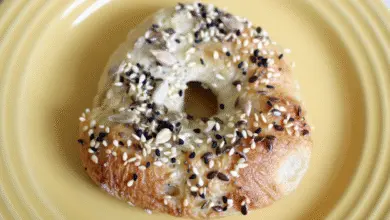
Gluten-Free Bagel Recipe (Simple and Tasty): Wheatless Wonders with Chewy Crust
These bagels are made with almond flour and tapioca flour rather than wheat flour. They don’t require yeast, boiling, or a stand mixer — just mix, shape, and bake. The result is a bagel with a soft interior and a slightly chewy crust, closer in texture to a baked roll than a traditional boiled-and-baked bagel, but satisfying and versatile. They take about 40 minutes from start to finish.
Ingredients
- 2 cups almond flour
- 1 cup tapioca flour (also sold as tapioca starch), plus extra for shaping
- 2 teaspoons gluten-free baking powder
- 1 teaspoon sea salt
- ½ teaspoon xanthan gum (optional — improves elasticity and chew)
- 2 large eggs, at room temperature
- 2 tablespoons olive oil or melted coconut oil
- 2 tablespoons maple syrup or honey
- ⅓ cup warm water
- 1 teaspoon apple cider vinegar
Optional toppings: sesame seeds, poppy seeds, everything bagel seasoning
Instructions
Step 1 — Preheat and prep Preheat oven to 375°F (190°C). Line a baking sheet with parchment paper.
Step 2 — Mix dry ingredients Whisk together almond flour, tapioca flour, baking powder, salt, and xanthan gum if using in a large bowl.
Step 3 — Mix wet ingredients In a separate bowl, whisk together eggs, oil, maple syrup or honey, warm water, and apple cider vinegar until smooth.
Step 4 — Form the dough Pour the wet ingredients into the dry and stir until a thick, sticky dough forms — it should resemble thick cookie dough rather than bread dough. If it’s too wet to handle, add tapioca flour one tablespoon at a time until it’s manageable.
Step 5 — Shape the bagels Lightly coat your hands with tapioca flour. Divide the dough into 6 equal portions. Roll each into a ball, then press your finger through the center and gently stretch the hole to about 1½–2 inches wide. The holes will shrink slightly during baking, so make them larger than you want the finished result to be. Place on the lined baking sheet with about 2 inches between each.
Step 6 — Add toppings Lightly mist the bagels with water or brush with a little beaten egg, then press toppings on firmly so they adhere.
Step 7 — Bake Bake for 25–28 minutes until the tops are golden brown and the bagels feel firm when gently pressed. Rotate the tray halfway through for even browning. Start checking at 22 minutes — almond flour browns faster than wheat flour.
Step 8 — Cool Transfer to a wire rack and cool for 10–15 minutes before slicing. Cutting too early causes the interior to compress and go gummy.
Tips
- Tapioca flour on your hands is essential for shaping — the dough is quite sticky without it
- Xanthan gum is optional but makes a noticeable difference in the chew — worth adding if you have it
- Every oven runs slightly differently; if your bagels are browning quickly on the outside before the 25-minute mark, tent loosely with foil and continue baking
- For the best texture, slice and toast before eating — these bagels improve significantly with toasting
Variations
- Everything bagel: Use everything bagel seasoning as the topping — press on firmly before baking
- Sesame: Cover generously with sesame seeds for a nutty, traditional look
- Cinnamon raisin: Fold ¼ cup of raisins and 1 teaspoon of ground cinnamon into the dough before shaping; reduce or omit savory toppings
- Herb: Add 2 tablespoons of finely minced chives or dill to the dough and top with dried garlic flakes
- Mini bagels: Divide into 12 smaller portions instead of 6 and reduce baking time to 18–22 minutes
Serving Suggestions
- Toasted with cream cheese and smoked salmon
- Sliced for sandwiches with turkey, lettuce, and mustard
- With avocado, a fried egg, and chili flakes
- With almond butter and a drizzle of honey
Storage
- Room temperature: up to 2 days in an airtight container — texture is best on the day they’re baked
- Freezer: slice in half before freezing, wrap individually, and freeze for up to 1 month — toast directly from frozen
Nutritional Information (per bagel, approximate — makes 6)
| Nutrient | Amount |
|---|---|
| Calories | ~280 kcal |
| Carbohydrates | ~22 g |
| Fat | ~18 g |
| Protein | ~8 g |
| Fiber | ~3 g |
✓ Gluten-Free ✓ Wheat-Free ✓ Dairy-Free Option Available
Recipe Details
- Cuisine: American
- Course: Breakfast / Snack
- Skill Level: Beginner
Frequently Asked Questions
Why did my bagels spread flat instead of holding their shape? The dough was too wet. Add tapioca flour a tablespoon at a time until it’s firm enough to hold its shape when rolled into a ball. Also make sure to flour your hands well — handling very sticky dough too much warms it up, which makes it softer.
Why are my bagels dense inside? This is common with almond flour bagels — they’re naturally denser than wheat bagels. Toasting helps significantly. Also make sure your baking powder is fresh (it should fizz when dropped in warm water) and that the apple cider vinegar is included, as it reacts with the baking powder for lift.
Can I make these without tapioca flour? Arrowroot starch can substitute for tapioca flour in equal amounts and produces a very similar result. Other flours like rice flour or coconut flour aren’t direct substitutes and would require significant recipe adjustments.
How do I get the toppings to stick? Misting the bagels lightly with water before adding toppings helps. Pressing the toppings on firmly rather than just sprinkling also makes a difference. An egg wash (one beaten egg brushed on) gives the best adhesion and also produces a glossier crust.
Do these taste like real bagels? They’re different from traditional wheat-and-yeast bagels — less chewy, with a nuttier flavor from the almond flour. They’re best thought of as their own thing rather than a direct replica. Toasted, they’re genuinely good and work well for any of the usual bagel toppings and fillings.